
29 September 2026
Industrial businesses rely on the experience of their people every day. But when valuable engineering and maintenance knowledge exists mainly in people's heads, what happens when those people retire, move roles or leave the business?
For many industrial businesses, some of their most valuable assets aren't machines or systems.
They're people.
Experienced engineers and technicians build up an enormous amount of knowledge over the course of their careers. They understand how equipment works, what tends to go wrong, which components need particular attention and how to approach a difficult maintenance task.
Much of that knowledge may never make it into a formal document.
And that can create a problem.
A maintenance manual can contain specifications, procedures, drawings and safety information. All of these are important.
But anyone who has worked around complex industrial equipment knows that there is often more to maintaining a machine than what is written in the manual.
An experienced technician might know:
This knowledge is built through experience.
The problem is that experience can be difficult to transfer.
Industrial businesses are constantly dealing with changes in their workforce.
People retire. Employees move into different roles. Experienced technicians leave. Businesses grow and recruit people who haven't worked with the equipment before.
When that happens, organisations can lose more than an individual member of staff.
They can lose years of accumulated knowledge.
Sometimes there is a handover process. Sometimes procedures are documented. But it is difficult to capture everything someone has learned over 10, 20 or 30 years simply by asking them to write it down.
This is why knowledge retention needs to be considered as part of a wider approach to documentation, training and digitalisation.
Digital tools can't replace experience.
But they can help make valuable knowledge easier to access and share.
Consider a new engineer trying to understand a complex piece of machinery.
A traditional approach might involve finding the correct manual, locating the relevant section, identifying a component from a technical drawing and then working out how the written instructions relate to the physical equipment.
For someone who already knows the machine, that might be straightforward.
For someone who doesn't, it can take considerably longer.
Visual information can help bridge that gap.
Being able to see the equipment, identify individual components and understand how parts fit together can make technical information much easier to interpret.
The objective isn't to remove the need for engineering knowledge.
It's to make that knowledge more accessible to people who don't yet have the same level of experience.
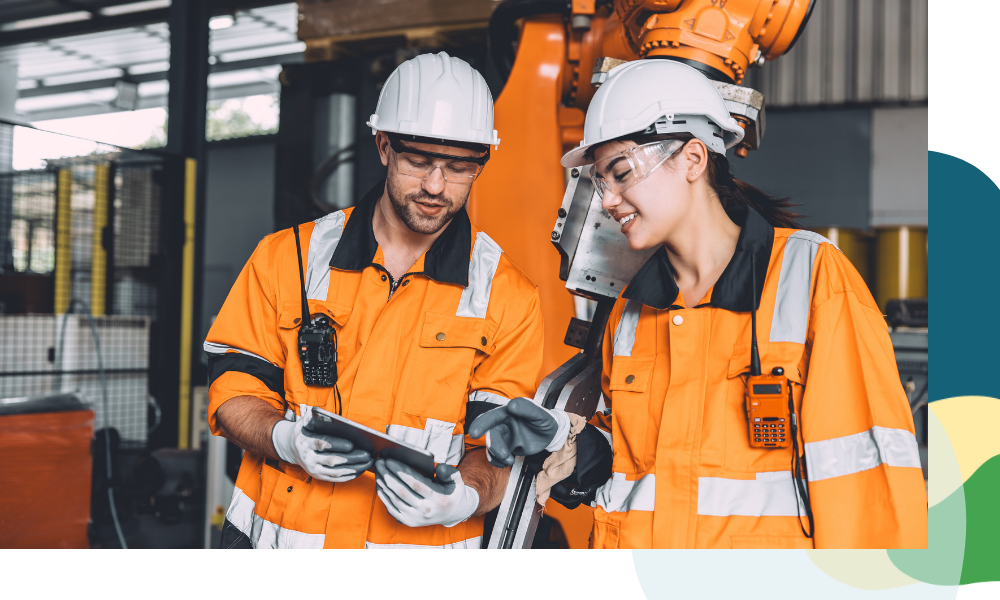
Industrial businesses already have a huge amount of engineering information.
CAD models, bills of materials, drawings, manuals and technical documentation can all contain valuable knowledge about a machine.
The challenge is often making that information useful beyond the people who originally created it.
A CAD model, for example, contains an enormous amount of information about how a machine has been designed, but it isn't necessarily the easiest format for a maintenance technician, trainer or new engineer to work with.
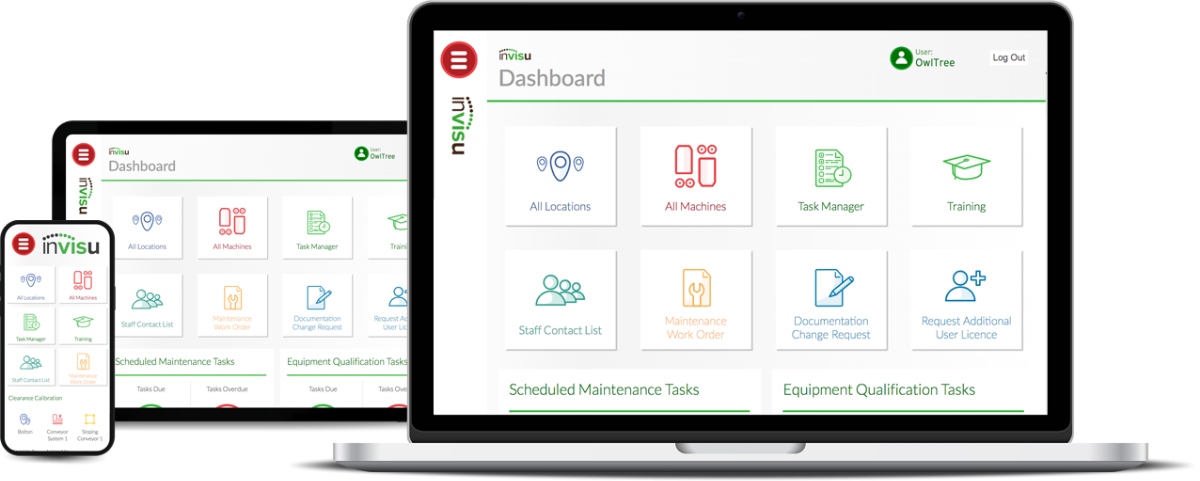
Tools such as Invisu Altus help organisations unlock greater value from existing CAD data by converting engineering models into interactive 3D experiences that are easier to understand, share and use.
That creates another opportunity: rather than treating existing engineering data as something that is simply stored, businesses can explore how it can be turned into practical information for the people working with the equipment.
Knowledge retention isn't only about protecting a business from people leaving.
It's also about helping new people learn.
Industrial businesses need to train engineers and technicians who may be working with increasingly complex machinery.
Someone new to a piece of equipment won't have years of experience to draw upon. They need to build that understanding.
Good documentation and training can help, but visual and interactive information can make that learning process more intuitive.
Instead of simply reading about a component, someone can see where it is located.
Instead of interpreting a technical drawing, they can explore the equipment in three dimensions.
Instead of relying entirely on an experienced colleague to explain how something works, they can access information themselves.
Over time, that can help turn individual experience into organisational knowledge.
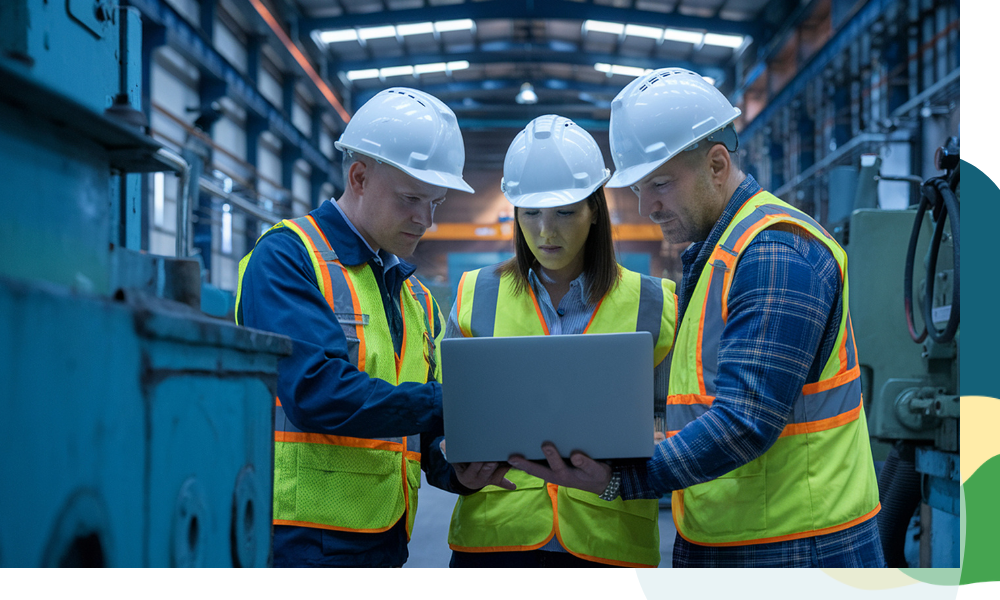
There is sometimes a misconception that digitalisation is about replacing human expertise.
We don't see it that way.
The experienced engineer remains incredibly valuable.
In fact, the better approach may be to use technology to extend the value of that expertise.
An experienced technician can help create, validate or improve procedures and guidance. That information can then be made available to others across the organisation.
The expert still provides the knowledge.
Digital tools can help make that knowledge easier to share.
The benefits can extend beyond maintenance.
Better access to engineering knowledge can support:
The underlying principle is the same:
Make the knowledge people need easier to find, understand and use.
Businesses don't necessarily need to digitise everything.
A more practical approach is to start by identifying where knowledge is most valuable — or where its loss would create the greatest risk.
That might be a particular machine with only one or two people who fully understand it.
It might be equipment that is difficult to maintain.
It might be a process that relies heavily on an experienced technician.
Or it could be an area where new employees take a long time to become confident.
Starting there can provide a much clearer reason for digitalisation than simply adopting technology because it is available.
People will always be one of the greatest sources of knowledge within an industrial business.
The challenge is making sure that knowledge doesn't disappear when circumstances change.
Digitalisation offers an opportunity to capture more of what organisations already know and make it available to the people who need it.
Platforms such as Invisu help organisations improve access to maintenance information through interactive and visual maintenance guidance.
The technology is only part of the answer, though.
The real value comes from bringing together the knowledge of experienced people, the engineering data already held by the business and information that is presented in a way people can actually use.
Digitalisation shouldn't replace engineering expertise. It should help organisations preserve it, share it and make it easier for others to use.